
You conduct a free demo class on Saturday.
Thirty students register. Twenty-two attend. The class goes well. Students ask questions, parents enquire about fees, and your admission team feels positive.
A week later, only four students have actually joined.
Where did the other students go?
This is a common problem for coaching institutes. And in many cases, the problem is not the quality of the class.
The real gap is what happens before, during and especially after the demo class.
A good demo class should not simply show that your faculty can teach. It should help students and parents understand what the complete learning experience will look like after admission.
Here is a practical step-by-step approach to turn more demo-class enquiries into paid admissions.
Table of Contents
- Why Students Attend Demo Classes but Don't Take Admission
- Step 1: Bring the Right Students to the Demo
- Step 2: Give Them a Reason to Attend
- Step 3: Give Students a Real Learning Experience
- Step 4: Show What Happens After the Class
- Step 5: Involve Parents at the Right Time
- Step 6: Don't Hide the Fees Until Later
- Step 7: End Every Demo with a Clear Next Step
- Step 8: Follow Up While the Demo Is Still Fresh
- Step 9: Treat Hot, Warm and Cold Leads Differently
- Step 10: Make Admission Easy
- Step 11: Track Your Demo-to-Admission Conversion Rate
- Where TutorPro Fits into the Demo-to-Admission Journey
- A Demo Class Shouldn't Feel Like a Sales Pitch
- Frequently Asked Questions
Why Students Attend Demo Classes but Don't Take Admission
Before trying to increase your demo-to-admission conversion rate, understand why students don't join.
Usually, there isn't one single reason.
A student may like the teacher but still have questions about the fees.
A parent may like the institute but want to compare two other coaching centres.
Another student may be interested but unsure about class timings.
Some simply say:
"I'll discuss it at home and let you know."
And then nobody follows up properly.
The most common reasons are:
- The wrong students are being invited to the demo
- The demo feels like a normal lecture
- Parents don't understand the complete course offering
- Fees and payment options are not explained clearly
- Students don't know what to do after the demo
- Follow-up happens too late
- Counsellors don't know which leads are genuinely interested
- Nobody tracks the demo-to-admission conversion rate
So, improving admissions requires more than improving the demo class itself.
You need to improve the complete journey.
Step 1: Bring the Right Students to the Demo
Getting 100 registrations sounds impressive.
But what if 70 of them have no real intention of joining your course?
A smaller group of genuinely interested students is often more valuable than a large number of random registrations.
Your registration form should therefore collect a little more information than just:
Name + Phone Number
For example, ask:
- Which course or exam are you preparing for?
- Which class/year are you currently studying?
- When are you planning to join?
- Are you looking for online, offline or hybrid classes?
- Which batch timing do you prefer?
Imagine you run a JEE coaching institute.
Instead of conducting one generic "Free JEE Demo", you could conduct separate sessions such as:
JEE 2027 – Repeaters Batch Demo
and
JEE 2028 – Foundation Batch Demo
Now the faculty knows exactly who is attending, and the class can address the needs of that particular group.
The conversation becomes much more relevant.
Step 2: Don't Just Remind Students. Give Them a Reason to Attend.
A message saying:
"Reminder: Demo class tomorrow at 10 AM."
does the job, but it doesn't create much interest.
Try telling students what they will actually get from attending.
For example:
"Tomorrow's NEET Physics demo will cover 3 common mistakes students make while solving Current Electricity questions. Keep a notebook ready."
Now there is a reason to show up.
You can send reminders:
Immediately after registration:
Confirmation, date, time and joining details.
One day before:
A short message explaining what students will learn.
One hour before:
Joining link or location details.
For online coaching institutes, automated notifications through your learning platform can make this process much easier.
Step 3: Give Students a Real Learning Experience
One mistake institutes make is turning the demo into a one-hour advertisement.
Students didn't register to listen to:
"Our institute has been operating for 12 years."
"We have the best faculty."
"We provide the best study materials."
They came to see whether your teaching can actually help them.
Teach something useful.
Choose a topic that students normally find difficult and explain it in a way that gives them a small win during the session.
Let them solve a problem.
Ask questions.
Conduct a quick poll.
Give them a short practice activity.
If the student thinks:
"I finally understood this topic."
your demo has already done more than a long sales presentation could.
Step 4: Show What Happens After the Class
A great teacher alone may not be enough to convince a parent.
Parents usually want to understand the complete system.
What happens if their child misses a class?
How are tests conducted?
Can they watch recorded classes?
How are doubts cleared?
Can parents track progress?
Are study materials available online?
How often are exams conducted?
Instead of simply explaining these features, show them.
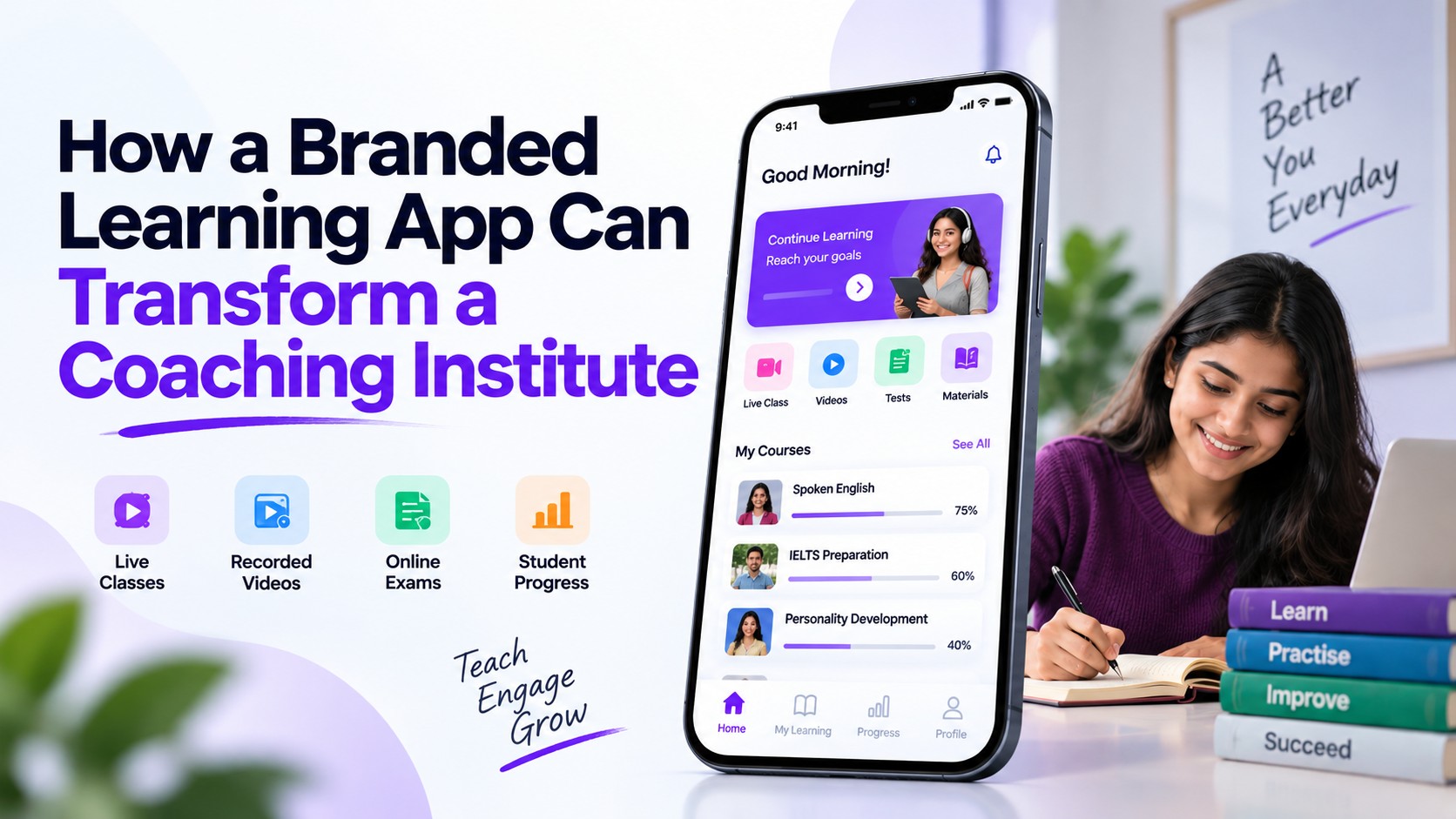
For example, if your institute uses a learning management system such as TutorPro, demonstrate the actual student experience.
Show how a student can:
- Attend live classes
- Watch recorded lessons
- Take online exams
- Complete practice activities
- Access study materials
- Ask questions
- Review performance and progress
- Receive personalized learning support
This changes the conversation.
You are no longer selling only a classroom.
You are showing parents the complete learning environment their child will receive after admission.
Step 5: Involve Parents at the Right Time
For school tuition, entrance coaching, PSC preparation and many professional courses, students may attend the demo—but parents are often involved in the final decision.
Ignoring them can create an unnecessary gap.
You don't necessarily need parents to sit through the entire class.
Instead, invite them for the final 10–15 minutes.
Use that time to explain:
- Course structure
- Faculty support
- Batch timings
- Test schedule
- Study materials
- Student progress tracking
- Doubt-clearing system
- Fees
- Instalment options
- How parents receive updates
This is also the right time to answer questions directly.
A parent who understands how the course works is in a much better position to make a decision than someone who only receives a fee PDF on WhatsApp.
Step 6: Don't Hide the Fees Until Later
"Contact our counsellor for fees."
Sometimes that is necessary, particularly when pricing depends on the programme.
But if a student has already attended a complete demo, making the fee structure unnecessarily complicated creates friction.
Explain clearly:
| Detail | Example |
|---|---|
| Course Fee | ₹XX,XXX |
| Duration | X months |
| What's Included | Classes + Recorded Videos + Tests + Study Materials |
| Payment | Full / Instalment Options |
If there are additional charges, explain them too.
Parents should understand exactly what they are paying for.
Transparency builds more confidence than a last-minute discount.
Step 7: End Every Demo with a Clear Next Step
A surprisingly common ending is:
"Okay, that's all for today. If you're interested, contact our office."
That's too vague.
Students should know exactly what happens next.
For example:
"The new batch starts on Monday. If you'd like to join, our admission team will share the registration link and fee details today. You can also speak with our counsellor if you have questions about the batch or payment options."
Simple.
No pressure.
But there is a clear next step.
Your goal isn't to force students to pay immediately. It is to make the admission process easy for students who have already decided.
Step 8: Follow Up While the Demo Is Still Fresh
This is where many coaching institutes lose good leads.
A student attends on Saturday.
Nobody contacts them until Thursday.
By then, they may have attended demos at two other institutes.
Industry guidance consistently emphasizes quick, organised follow-up rather than relying on counsellors to remember every enquiry.
Create a simple follow-up system.
Immediately After the Demo
Send:
- Thank-you message
- Demo notes or useful study material
- Course details
- Admission link
- Counsellor contact
Next Day
Call personally.
But don't start with:
"Are you joining?"
Ask:
"How did you find yesterday's class?"
Then listen.
Maybe the student liked the class but the timing doesn't work.
Maybe the parent needs an instalment option.
Maybe they want to know more about tests.
Now your counsellor has something useful to discuss.
Day 2 or 3
Share something valuable.
It could be:
- Practice questions
- Demo topic notes
- A sample test
- Another short recorded lesson
- Course schedule
Later Follow-up
Address the actual concern.
If the issue is fees, explain payment options.
If the issue is timing, discuss another batch.
If they are comparing institutes, explain your learning system clearly without attacking competitors.
Follow-up should feel helpful, not desperate.
Step 9: Treat Hot, Warm and Cold Leads Differently
Not every demo attendee has the same level of interest.
Suppose 40 students attended.
Some stayed until the end, asked about fees and wanted to know when the batch starts.
Others attended but didn't interact.
A few joined for ten minutes and disappeared.
Should your counsellor call all 40 students with the same urgency?
Probably not.
You can divide them into simple groups.
Hot Leads
Students who:
- Asked about fees
- Asked about admission
- Checked batch timings
- Completed the demo
- Spoke with a counsellor
These students should receive priority follow-up.
Warm Leads
They attended and showed some interest but haven't made a decision.
Continue nurturing them with useful information and follow-ups.
Cold Leads
They registered but didn't attend, or left very early.
Instead of repeatedly calling them, invite them to another demo or share a useful free resource.
This is where having a CRM or structured admission system becomes valuable.
Step 10: Make Admission Easy
Imagine a parent has finally decided to join.
Then you tell them:
"Please come to our office tomorrow, fill out this form, send the documents and transfer the amount to this bank account."
You've added another opportunity for the admission to get delayed.
Where possible, simplify the process.
Students should be able to move from:
without unnecessary steps.
For online and hybrid coaching institutes, this becomes particularly important.
A customized LMS can bring classes, learning content, assessments and student access into one branded platform.
Step 11: Track Your Demo-to-Admission Conversion Rate
Don't judge a demo by applause.
Judge it by data.
Suppose:
↓
70 attended
↓
25 requested course details
↓
15 paid
Now you can see exactly where students are dropping.
Track metrics such as:
- Demo registrations
- Demo attendance rate
- No-show rate
- Demo-to-enquiry rate
- Demo-to-admission conversion rate
- Follow-up response rate
- Admissions by counsellor
- Admissions by course
- Admissions by lead source
Your own historical conversion rate is usually more useful than chasing a generic industry benchmark because pricing, course type, geography and lead quality vary widely.
If 70 students attend but only five request details, perhaps the demo itself needs improvement.
If 30 request details but only five receive follow-up, you have an admission-process problem.
Data tells you where to look.
Where TutorPro Fits into the Demo-to-Admission Journey
For a growing coaching institute, managing demo classes through separate Zoom links, WhatsApp groups, spreadsheets, payment messages and recorded-video links can become difficult.
TutorPro helps institutes create their own customized and branded learning platform instead of depending on disconnected tools.
You can bring important parts of the student journey together, including:
Live Classes
Run interactive online learning sessions.
Recorded Classes
Give students access to lessons they can revisit.
Online Exams & Practice
Let students experience how tests and practice work before and after admission.
Study Materials
Keep notes, PDFs and learning resources organised.
Student Analytics
Understand learning activity and performance.
Personalized Learning
Create a more structured learning experience based on student needs.
Your Own Brand
Students learn through your institute's branded platform rather than being sent between unrelated tools.
For parents, this demonstrates that the institute has a structured learning system.
For students, it makes the transition from demo class to regular learning much smoother.
And for the institute, it creates a more scalable way to manage students as admissions grow.
A Demo Class Shouldn't Feel Like a Sales Pitch
The best demo classes don't pressure students into taking admission.
They answer a simpler question:
"What will learning here actually feel like?"
Give students one useful learning experience.
Show parents how the complete course works.
Explain the fees clearly.
Make the next step simple.
And most importantly, follow up while the conversation is still fresh.
Because sometimes the difference between:
"The demo was good."
and
"We've completed the admission."
isn't better teaching.
It's simply having a better system around the teaching.
Frequently Asked Questions
1. How can coaching institutes convert demo classes into admissions?
Focus on the complete journey rather than the demo alone. Invite relevant students, teach something genuinely useful, demonstrate your learning system, involve parents, explain fees clearly and follow up quickly after the class.
2. How long should a coaching institute demo class be?
There is no perfect duration for every course, but around 45–60 minutes can work well for many coaching demos. The session should be long enough to demonstrate the teaching style without exhausting students before you explain the programme and next steps.
3. When should we follow up after a demo class?
Start soon after the session while students and parents still remember the experience. Send useful information immediately and follow it with a personal conversation rather than waiting several days.
4. Should parents attend demo classes?
For school tuition, entrance coaching and other programmes where parents are involved in the purchase decision, inviting them to the final part of the demo can be useful. Explain the course structure, progress tracking, fees and support system clearly.
5. Can an LMS help coaching institutes increase admissions?
An LMS cannot guarantee admissions. However, it can help institutes provide a more organised demo and learning experience by bringing live classes, recorded lessons, exams, practice, study materials and student progress into one platform.
6. What is the best LMS for coaching institutes?
The right LMS depends on the institute's requirements. Coaching businesses that want their own branding, customized workflows, online classes, recorded content, exams, practice and learning analytics may benefit from a customizable platform such as TutorPro.
Ready to Build Your Own Branded Learning Platform?
If your coaching institute is growing, your technology should be able to grow with it.
TutorPro helps coaching institutes, training centres and education businesses build a customized LMS under their own brand — with live classes, recorded learning, online exams, practice, study materials, analytics and AI-powered learning features.
Book a TutorPro Demo and see how your institute's complete learning experience can work on one platform.